
Canto 1
Chapter 16: How Parîkchit Received the Age of Kali
(1) Sûta said: "Oh scholars, Parîkchit, the great devotee, thereafter, being instructed by the best brahmins, ruled over the earth with all the qualities that the astrologers, who predicted the future at the time of his birth, thought he would have. (2) He married with Irâvatî, the daughter of King Uttara, and begot four sons in her of whom Janamejaya was the first. (3) At the Ganges he performed three horse sacrifices wherein the demigods showed themselves. Kripâcârya, whom he had selected as his spiritual master, was therefore awarded appropriately. (4) Once on a military campaign he, the valiant hero, by dint of his prowess managed to overpower the master of Kali-yuga who had disguised himself as a king but who, lower than a s'ûdra [a laborer], was hurting the legs of a cow and a bull."
(5) S'aunaka inquired: "Why did he during his campaign subdue the master of Kali who dressed up as a king like a low s'ûdra was striking the legs of a cow? Please oh fortunate one, describe that to us, if that would relate to the topics of Krishna. (6) What is the use of other subjects that, being illusory, do not relate to His lotus feet the nectar of which is licked by the truth-loving souls? That would be a waste of one's life! (7) Oh Sûta, those among the mortal human beings who are sure to meet death here but who desire righteousness [truth and eternal life], call for the great lord of death [Yamarâja] to perform the preparatory rites. (8) The great sages invite him because no one will die as long as he, the great lord who causes the end of life, is present here. Ah! May everyone in the world drink from the nectar of the narrations about the divine pastimes of the Supreme Lord. (9) Those after all, who are lazy, have a dull mind and are short-lived, pass their days and nights with aimless activities and sleeping."
(10) Sûta said: "When Parîkchit, residing in the Kuru capital, learned that the signs of Kali-yuga had entered the domain of his jurisdiction, he considered the news not very palatable and took up his bow and arrows to meet the conflict with military means. (11) Well decorated under the protection of the lion in his flag and with black horses pulling his chariot, he left the capital accompanied by charioteers, cavalry, elephants and infantry troops to assure himself of a victory. (12) Bhadrâs'va, Ketumâla, Bhârata, the northern countries of Kuru and Kimpurusha behind the Himalayas were the lands on earth he conquered, maintaining his authority by exacting tribute. (13-15) Everywhere he went he continuously heard what great souls his forefathers were and found also indications of the glorious acts of Lord Krishna among the people he met. He heard about his own deliverance from the powerful rays of the weapon of As'vatthâmâ and about the love and devotion for Lord Kes'ava [Krishna as the killer of the demon Kes'î, the mad horse] among the descendants of Vrishni and Parthâ. Extremely pleased therewith he gratefully, with eyes wide open of joy, rewarded the people magnanimously with clothes, necklaces and other riches. (16) He [Krishna] who is [a manifestation] of Lord Vishnu and Himself was obeyed by everyone, by serving as a chariot driver, presiding in assemblies and acting as a servant, by being a friend and a messenger and keeping watch at night, acted with prayers and obeisances to the liking of the God-fearing sons of Pāndu. This filled the king with devotion for His lotus feet.
(17) Thus day after day absorbed in thoughts about the good qualities of his forefathers, not far away from where he was, a most peculiar incident took place. Let me tell you about it. (18) Dharma [the personality of religion, a bull] who wandered around on [but] one leg [firmly], met a cow [mother earth] with tears in her eyes, like she was a mother who has lost her child. He questioned her. (19) Dharma said: 'Madam, are you in good health? Looking so sad with a gloomy face, oh mother, you seem to be afflicted by a disease or to be preoccupied with some relative far away. (20) Do you lament my three weakened legs with me standing [firmly] on one leg only, or is it because you are exploited by meat eaters? Is it because the leading demigods are deprived of their sacrificial share or because the living beings increasingly suffer from scarcity, famine and drought? (21) Are you grieving about the unhappy women and children on earth who [because of failing marriages] have to miss the protection of their husbands and fathers or are you sorry about the way one in the families of the learned souls acts against the goddess of learning [by not being directed at the Person anymore]? Or do you lament the fact that most of them act non-brahminical in service of the ruling class [or even serve in business]? (22) Is it because the descendants of the noble class under the influence of Kali-yuga appear to have lost their minds and left and right have messed up the affairs of the state? Or is it because of the habits developed in society to take one's food and drink and how one dresses, bathes and has intercourse? (23) Or could it be, oh mother, because of your heavy burden now Hari, the Lord who diminished your burden, has disappeared from sight, with you thinking of everything He did and the salvation He entails? (24) Please inform me, oh reservoir of all riches, about the reason of your sadness that reduced you to such a weak state. Or has, oh mother, powerful Time that even subdues the most powerful soul, stolen away your good fortune extolled by the demigods?'
(25) Mother Earth replied: 'Oh Dharma, I will do my best to answer all the questions you asked me, for you are with your four legs [the vidhi] present in all the worlds to bring happiness. (26-30) Truthfulness, cleanliness, compassion, self-control, magnanimity, contentment, straightforwardness, concentration, sense control, responsibility, equality, tolerance, equanimity and loyalty. And certainly also knowledge, detachment, leadership, chivalry, influence, power, dutifulness, independence, dexterity, beauty, serenity and kindheartedness, as also ingenuity, gentility, mannerliness, determination, knowledgeability, propriety, pleasantness, joyfulness, immovability, faithfulness, fame and dignity - all these and many others are the most important everlasting qualities of the Supreme Lord, the never ever diminishing higher nature desired by those wishing for His greatness. I am thanks to Him, the reservoir of all qualities and the home of the goddess of fortune, myself such an abode, but I lament now that in His absence, Kali, the source of all sins, is seen all over the world. (31) I am lamenting both for me and for you, for the best of the enlightened souls, the gods and the ancestors in heaven, the sages and the devotees, as also for all people in their status orientations in society. (32-33) Lakshmî [the Goddess of Fortune] whose grace was sought by Brahmâ and others who for many days executed penances for her in surrender to the Lord, has without hesitation forsaken her abode in the forest of lotus flowers out of attachment to serve His all-auspicious feet. With my body decorated with the impressions of the footprints with [the marks of] the lotus flower, thunderbolt, flag and driving rod of the Supreme Lord, the proprietor of all opulence, I superseded beautifully the three worlds. But, after my places [my worlds] had obtained His splendor, He in the end has abandoned me who was so happy with it. (34) He who relieved me of the burden of the hundreds of military divisions of atheist kings, incarnated [just as well] for you in an attractive form in the Yadu family, because you, lacking in inner strength, had difficulty to keep standing. (35) Who, I ask you, can tolerate it to be separated from the Supreme Original Person who with His loving glances, smiles and hearty appeals defeated the strong attachment of His sweet and proud women and made my hair [my grasses] stand on end out of pleasure for being imprinted by His feet?'
(36) While the [cow of mother] earth and [the bull of] dharma were thus conversing, Parîkchit, who was renown for being the saint among the kings, arrived at the Sarasvatî river that was flowing to the east."
Read the inspiration to this chapter by Anand Aadhar.


Third revised edition, loaded April 8, 2023.
Previous Aadhar edition and Vedabase links:Sûta said: "Oh scholars, Parîkchit, the great devotee, thereafter, being instructed by the best brahmins, ruled over the earth with all the qualities that the astrologers, who predicted the future at the time of his birth, thought he would have.Sûta said: "O learned ones, thereafter ruled Parîkchit, the great devotee, over the earth under the instructions of the twice-born with the qualities that the astrologers, predicting the future at the time of his birth, had thought he would have. (Vedabase)
He married with Irâvatî, the daughter of King Uttara, and begot four sons in her of whom Janamejaya was the first.
He married Irâvatî, the daughter of King Uttarâ, and begot four sons in her with Janamejaya as the first. (Vedabase)
At the Ganges he performed three horse sacrifices wherein the demigods showed themselves. Kripâcârya, whom he had selected as his spiritual master, was therefore awarded appropriately.
At the Ganges he performed three horse sacrifices with proper rewards for Kripâcârya, whom he selected for his spiritual master, and the God-conscious who came into view with it. (Vedabase)
Once on a military campaign he, the valiant hero, by dint of his prowess managed to overpower the master of Kali-yuga, who had disguised himself as a king but who, lower than a s'ûdra [a laborer], was hurting the legs of a cow and a bull."
Once on a chastising campaign managed he, the valiant hero, by dint of his prowess to rebuke the master of Kali-yuga who, disguised as a king, but lower than a s'ûdra was hurting the legs of a cow and a bull." (Vedabase)
S'aunaka inquired: "Why did he during his campaign subdue the master of Kali who dressed up as a king like a low s'ûdra was striking the legs of a cow? Please oh fortunate one, describe that to us, if that would relate to the topics of Krishna.
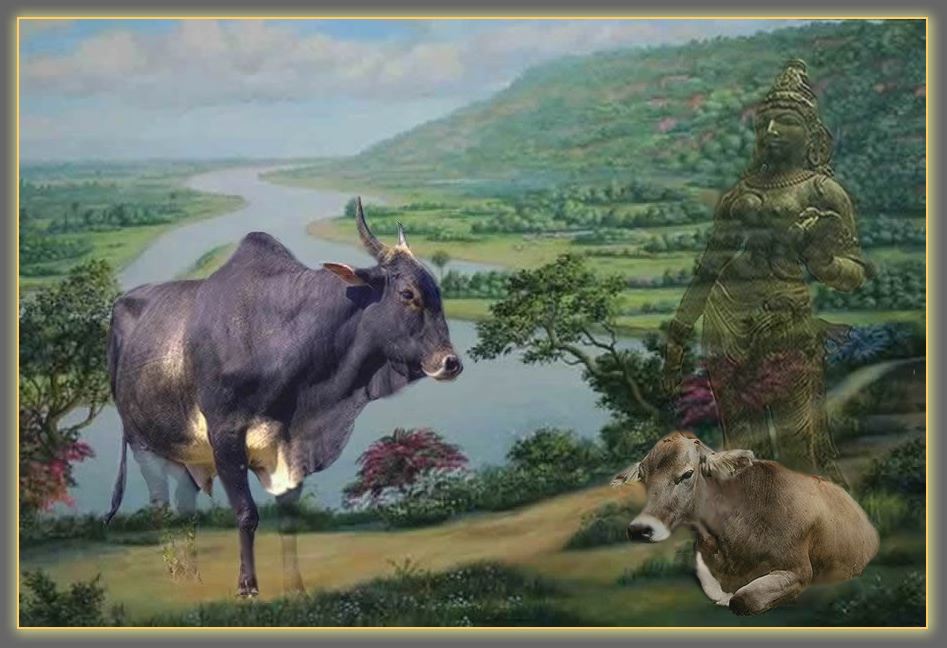
S'aunaka inquired: "Why did he just reprimand the master of Kali during his campaign - he was dressed up like a king, but as someone lower than a s'ûdra striking the legs of a cow. Please describe, o fortunate one, all that to us as far as it relates to the topics of Krishna. (Vedabase)
What is the use of other subjects that, being illusory, do not relate to His lotus feet, the nectar of which is licked by the truth-loving souls? That would be a waste of one's life!
Because, what would, for the ones liberated who relish the honey at His lotus feet, be the use of wasting their life with endless illusory discussions? (Vedabase)
Oh Sûta, those among the mortal human beings who are sure to meet death here but who desire righteousness [truth and eternal life], call for the great lord of death [Yamarâja] to perform the preparatory rites.
O Sûta, only short is the life of the human beings who are sure to meet death. The eternal is of those who desire herein to call for the representative of the Lord, Yamarâja, the controller of death, to limit the performances. (Vedabase)
The great sages invite him because no one will die as long as he, the great lord who causes the end of life, is present here. Ah! May everyone in the world drink from the nectar of the narrations about the divine pastimes of the Supreme Lord.
No one will die as long as the one who causes death is present here, for the reason of which he as the great lord has been invited by the sages - let the ones under his grip drink of the nectar of the narrations about His divine pastimes. (Vedabase)
Those after all, who are lazy, have a dull mind and are short-lived, pass their days and nights with aimless activities and sleeping."
Those who are lazy, of trivial interest and short-lived pass their days, the way they do sleeping at night, with activities without a purpose." (Vedabase)
Sûta said: "When Parîkchit, residing in the Kuru capital, learned that the signs of Kali-yuga had entered the domain of his jurisdiction, he considered the news not very palatable and took up his bow and arrows to meet the conflict with military means.
Sûta said: "When Parîkchit, residing in the Kuru capital, heard that the signs of Kali-yuga had entered the domain of his jurisdiction, thought he the news not very palatable and took he, in his responsibility for military action, up his bow and arrows. (Vedabase)
Well decorated under the protection of the lion in his flag and with black horses pulling his chariot, he left the capital accompanied by charioteers, cavalry, elephants and infantry troops to assure himself of a victory.
Well decorated under the protection of the lion in his flag and with black horses pulling his chariot, he left the capital accompanied by charioteers, cavalry, elephants and infantry troops for the purpose of conquering. (Vedabase)
Bhadrâs'va, Ketumâla, Bhârata, the northern countries of Kuru and Kimpurusha behind the Himalayas were the lands on earth he conquered, maintaining his authority by exacting tribute.
Bhadrâs'va, Ketumâla, Bhârata, the northern countries of Kuru and Kimpurusha behind the Himalayas were the lands on earth he conquered keeping strength exacting tribute. (Vedabase)
Everywhere he went he continuously heard what great souls his forefathers were and found also indications of the glorious acts of Lord Krishna among the people he met. He heard about his own deliverance from the powerful rays of the weapon of As'vatthâmâ and about the love and devotion for Lord Kes'ava [Krishna as the killer of the demon Kes'î, the mad horse] among the descendants of Vrishni and Parthâ. Extremely pleased therewith he gratefully, with eyes wide open of joy, rewarded the people magnanimously with clothes, necklaces and other riches.
Everywhere he went he continuously heard what great souls his forefathers were and found he also indications of the glorious acts of Lord Krishna with the people he met. He as well heard about his own deliverance from the powerful rays of the weapon of As'vatthâmâ and about the devotion amongst the descendants of Vrishni and Parthâ for Lord Kes'ava [Krishna as the killer of the demon Kes'î, the mad horse]. Extremely pleased rewarded he, with his eyes wide open of joy, the people magnanimously with clothes, necklaces and other riches. (Vedabase)
He [Krishna] who is [a manifestation] of Lord Vishnu and Himself was obeyed by everyone, by serving as a chariot driver, presiding in assemblies and acting as a servant, by being a friend and a messenger and keeping watch at night, acted with prayers and obeisances to the liking of the God-fearing sons of Pāndu. This filled the king with devotion for His lotus feet.
Figuring as a chariot driver, presiding in assemblies, acting as a servant, being a friend and a messenger and keeping the watch at night had the one of Vishnu, who was universally obeyed Himself [Krishna], acted with prayers and obeisances in relating to the God-fearing sons of Pându. This filled the king with devotion for His lotus feet. (Vedabase)
Thus day after day absorbed in thoughts about the good qualities of his forefathers, not far away from where he was, a most peculiar incident took place. Let me tell you about it.
You may now hear from me about how astonishingly he, day after day, kept himself close in being absorbed in such thoughts about the good of the forefathers. (Vedabase)
Dharma [the personality of religion, a bull] who wandered around on [but] one leg [firmly], met a cow [mother earth] with tears in her eyes, like she was a mother who has lost her child. He questioned her.
The wandering personality of the religion, who stood on one leg only [the so called 'bull' of dharma whose legs stand for the four fundamental human values], met with the aggrieved cow [mother Earth] who had tears in her eyes like a mother who has lost her child. (Vedabase)
Dharma said: 'Madam, are you in good health? Looking so sad with a gloomy face, oh mother, you seem to be afflicted by a disease or to be preoccupied with some relative far away.
He said: 'Madam, are you hale and hearty? Looking aggrieved with a gloomy face you appear to be affected by a disease or to be preoccupied with a friend far away, o mother. (Vedabase)
Do you lament my three weakened legs with me standing [firmly] on one leg only, or is it because you are exploited by meat eaters? Is it because the leading demigods are deprived of their sacrificial share or because the living beings increasingly suffer from scarcity, famine and drought?
Are you lamenting about the diminishing of my legs as I stand on one only, or is it because the offensive meat-eaters want to exploit you? Or is it because the theists are bereft of their share due to a lack of sacrifices or because the living beings increasingly suffer from scarcity, famine and drought? (Vedabase)
Are you grieving about the unhappy women and children on earth who [because of failing marriages] have to miss the protection of their husbands and fathers or are you sorry about the way one in the families of the learned souls acts against the goddess of learning [by not being directed at the Person anymore]? Or do you lament the fact that most of them act non-brahminical in service of the ruling class [or even serve in business]?
Are you grieving about the unhappy women and children on earth who are without the protection of their men or are you sorry about the way one speaks in the families of the learned against the principles of the goddess [of knowledge]? Or do you lament about the way most of them act against the culture of learning taking shelter with the ruling class? (Vedabase)
Is it because the descendants of the noble class under the influence of Kali-yuga appear to have lost their minds and left and right have messed up the affairs of the state? Or is it because of the habits developed in society to take one's food and drink and how one dresses, bathes and has intercourse?
Is it because the unworthy administrators are bewildered under the influence of Kali-yuga and here and there have messed up the affairs of the state? Or is it because of the way society is inclined to take its food and drink and how one sleeps, bathes and has intercourse? (Vedabase)
Or could it be, oh mother, because of your heavy burden now Hari, the Lord who diminished your burden, has disappeared from sight, with you thinking of everything He did and the salvation He entails?
Could it be, o mother Earth, that you are thinking of the salvation brought by the activities of the incarnation of the Lord who decreased your heavy load but is now out of sight? (Vedabase)
Please inform me, oh reservoir of all riches, about the reason of your sadness that reduced you to such a weak state. Or has, oh mother, powerful Time that even subdues the most powerful soul, stolen away your good fortune extolled by the demigods?'
Please inform me, o reservoir of all riches, about the reason of your tribulations that reduced you to such weakness. Is it mother, that your good fortune that was adored by even the godly, was forcibly taken away by the very powerful influence of time?' (Vedabase)
Mother Earth replied: 'Oh Dharma, I will do my best to answer all the questions you asked me, for you are with your four legs [the vidhi] present in all the worlds to bring happiness.
Mother Earth replied: 'O personality of religion ['Dharma'], I will do my best to answer the series of questions that you have asked me. You are with your four legs [the vidhi] present in all the worlds to bring there the happiness. (Vedabase)
Truthfulness, cleanliness, compassion, self-control, magnanimity, contentment, straightforwardness, concentration, sense-control, responsibility, equality, tolerance, equanimity and loyalty. And certainly also knowledge, detachment, leadership, chivalry, influence, power, dutifulness, independence, dexterity, beauty, serenity and kindheartedness, as also ingenuity, gentility, mannerliness, determination, knowledgeability, propriety, pleasantness, joyfulness, immovability, faithfulness, fame and dignity - all these and many others are the most important everlasting qualities of the Supreme Lord, the never ever diminishing higher nature desired by those wishing for His greatness. I am thanks to Him, the reservoir of all qualities and the home of the goddess of fortune, myself such an abode, but I lament now that in His absence, Kali, the source of all sins, is seen all over the world.
Truthfulness, cleanliness, compassion, self-control, magnanimity, contentment, straightforwardness, concentration, sense-control, responsibility, equality, tolerance, equanimity and loyalty. And certainly also knowledge, detachment, leadership, chivalry, influence, power, dutifulness, independence, dexterity, beauty, serenity and kindheartedness, as well as ingenuity, gentility, mannerliness, determination, knowledgeability, propriety, pleasantness, joyfulness, immovability, faithfulness, fame and dignity - all these and many others are the everlasting qualities of the Supreme Lord, the never diminishing higher nature which can be attained by those who are worthy of that greatness. By Him am I myself, just as the Goddess of Fortune is, such a reservoir of qualities, but in the absence of Him as the being the resting place, is Kali, the source of all sins, seen in all the worlds. (Vedabase)
I am lamenting both for me and for you, for the best of the enlightened souls, the gods and the ancestors in heaven, the sages and the devotees, as also for all people in their status orientations in society.
I am lamenting for me as well as for you, as well as for the best of the godly, the gods and the ancestors in heaven, the sages and the devotees, as well as for all in their status orientations in society. (Vedabase)
Lakshmî [the Goddess of Fortune] whose grace was sought by Brahmâ and others who for many days executed penances for her in surrender to the Lord, has without hesitation forsaken her abode in the forest of lotus flowers out of attachment to serve His all-auspicious feet. With my body decorated with the impressions of the footprints with [the marks of] the lotus flower, thunderbolt, flag and driving rod of the Supreme Lord, the proprietor of all opulence, I superseded beautifully the three worlds. But, after my places [my worlds] had obtained His splendor, He in the end has abandoned me who was so happy with it.
Lakshmî [the Goddess of Fortune] whose grace was sought by demigods like Lord Brahmâ and for whom the gods many times were doing penance in surrender to the Lord, has for the sake of worship forsaken her own abode in the forest of lotus flowers out of attachment to the all-blissful feet. From Him, having myself obtained the special powers of the lotus flower, thunderbolt, flag and driving rod, could I, impressed by the marks of the feet of the Supreme Lord, the owner of all opulence, being decorated that way magnanimously be victorious in the three worlds - but in the end, when I was feeling so fortunate, has He left me. (Vedabase)
Text 34
He who relieved me of the burden of the hundreds of military divisions of atheist kings, incarnated [just as well] for you in an attractive form in the Yadu family, because you, lacking in inner strength, had difficulty to keep standing.
He who relieved me of the burden of the hundreds of military divisions of atheist kings, incarnated also for you in the Yadu family, and that He did for the reason that you lacking in strength had difficulty to keep standing. (Vedabase)
Who, I ask you, can tolerate it to be separated from the Supreme Original Person who with His loving glances, smiles and hearty appeals defeated the strong attachment of His sweet and proud women and made my hair [my grasses] stand on end out of pleasure for being imprinted by His feet?'
Who therefore can tolerate it to be separated from the love, glances, smiles and hearty appeal of the Supreme Original Person who conquered the passionate wrath and gravity of women like Satyabhâmâ and made my hair [my grasses] stand on end out of the pleasure of being imprinted by His feet.' (Vedabase)
While the [cow of mother] earth and [the bull of] dharma were thus conversing, Parîkchit, who was renown for being the saint among the kings, arrived at the Sarasvatî river that was flowing to the east."
While the earth and the personality of religion were thus conversing, arrived Parîkchit, who was renown for being the saint among the kings, at the Sarasvatî river which was flowing to the east." (Vedabase)


The text and audio is offered under the
conditions of the
Creative Commons
Attribution-Noncommercial-Share Alike 3.0 Unported License.
The picture is a photomontage/collage by Anand Aadhar of a (holy)
bull, a cow and a statue of Bhudevi,
against the background of a landscape painted by Vrindavan das (used with
permission).
Production: Filognostic Association of The Order of Time.

Feed-back | Links | Downloads | Music | Pictures | What's New | Search | Donations




 Text 1