(25) A woman in
divine respect of
her husband will, always
following
him in his vows, be of service to her husband, be eager to please him
and be well-disposed towards his friends and relatives [see also B.G. 1:
40].

Chapter 12:
The Four Âs'ramas and How to Leave the Body
(11) The
above [in verse 6] described directions of the guru for
the householder apply equally to the renunciate soul, be it that the householder
can have sexual intercourse for a certain period of time [see also B.G. 7:
11].
Chapter 13:
The Behavior of a Saintly Person
(26) But
seeing how one, in that
position always acting for the avoidance
of
misery and for the sake of the
pleasure that men and women have, achieves the opposite, I have
terminated those activities. (27) To
be
happy
is
the
natural
position
of
the
soul
and to put an end to all material activities constitutes the
cause of the manifestation of this happiness. Having understood that
sense enjoyment follows from fostering desires, I am now lying here
slumbering silently.
Chapter 14:
The Supreme of the Householders Life
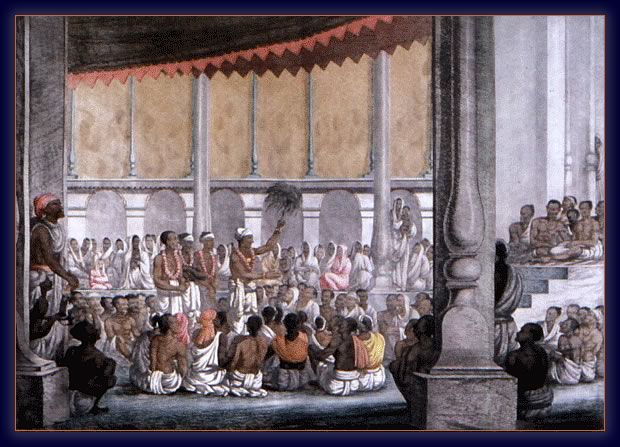
(24) It is
by these auspicious times [of being
regular to natural occurrences] that the fate of human beings is
improved. For the human being during all seasons to have auspiciousness,
success
and
longevity,
one
therefore
on
those days must perform all kinds of ceremonies [*].
Chapter 15:
Nârada's Instructions on Sharing,
Irreligion, Yoga and Advaita
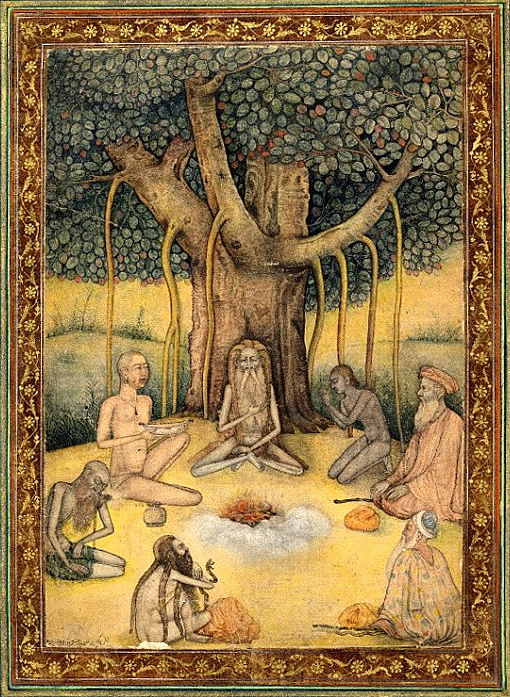
(26) The guru, who is the light on
the path, must be considered the Supreme Lord in person and he who
considers him and what he heard from him as being mortal and
time-bound, is
like an
elephant that has bathed [and
thereafter takes a dust bath].
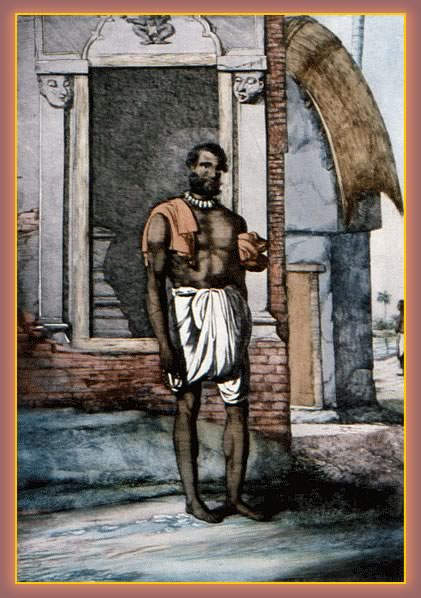
(55) Repeatedly
being
born
again in following
what one calls the path of God
[this nivritti process],
he who endeavors for self-realization
and
desires
the
peace
of
the
soul,
will not return once he has found his position in the true self [see also B.G. 8: 16].
For copyright
notices
concerning the individual images
please look at the bottom of the chapter they belong to.